Comprehensive Testing
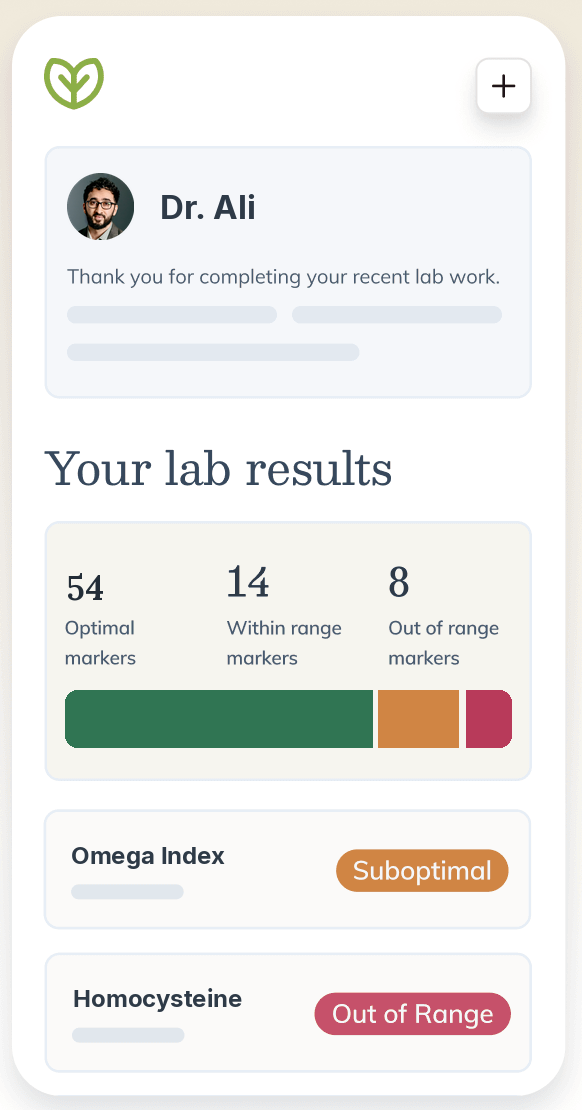
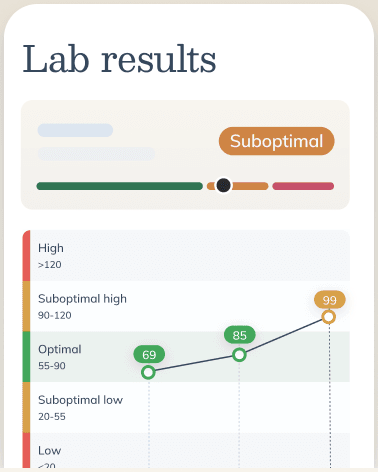
Every engagement starts with a comprehensive lab panel, testing the markers that matter most for a clear picture of your health. Dr. Ali reviews every biomarker personally, explains what it means, and builds a plan around your results. The entire experience, from scheduling your draw to reviewing your results, happens in the Fullscript app, an intuitive, easy to use experience designed around you.
You'll receive a personalized Journey through the Fullscript app. Schedule your blood draw at a local lab near you right from your phone. No office visit required to get started.
Dr. Ali reviews every result personally in a dedicated live consult and answers any questions.
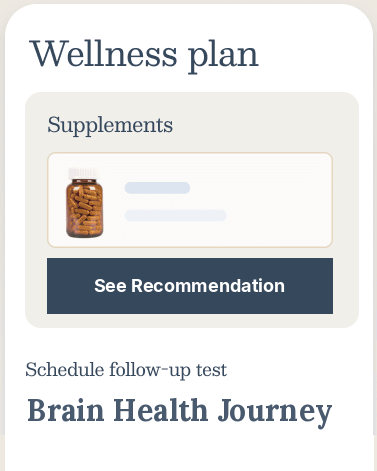
Your results, plus personalized diet, exercise, lifestyle and supplement recommendations, all in one intuitive, easy to use app you can return to anytime.
Pediatric Brain Health Panel
76 biomarkers
$1,250
Ages 5–17
Adult Brain Health Panel
93 biomarkers
$1,750
18 and older
See it in the app
Diet, exercise, lifestyle and supplement recommendations, all built around you and your data.
What's tested
Comprehensive baseline biomarker testing. Below is what gets tested, and why each group is worth measuring.
| Category | What it tells us |
|---|---|
| B vitamins and folate pathway | B12 and folate are needed to make the chemicals that regulate mood and to keep nerves healthy. Running low can look like low mood, irritability or forgetfulness. Homocysteine shows whether your body is actually using them, which a B12 level on its own cannot. |
| Vitamin D | The brain uses vitamin D directly. Low levels are linked with low mood, fatigue, and feeling worse during the darker months of the year. |
| Minerals and trace elements | Magnesium affects sleep and how the body handles stress. Zinc affects mood, appetite and growth, which matters in growing children and adults alike. Copper is measured alongside zinc because the two compete with each other, and too much copper causes problems of its own. |
| Iron status | The body needs iron to make dopamine, the chemical behind focus and motivation. Low iron is common in growing children and in women who have heavy periods, and it can look like trouble concentrating, restlessness, tiredness and poor sleep. Iron stores fall long before a standard blood count would call it anemia. |
| Thyroid function | The thyroid can imitate a psychiatric problem closely enough that it is worth checking in everyone. An underactive thyroid can look like depression and slowed thinking. An overactive one can look like anxiety. Antibodies often appear years before the thyroid itself starts to struggle. |
| Inflammation | Low grade inflammation shows up across psychiatric presentations, from low mood and anxiety to fatigue and cognitive fog. Where it is present, it can blunt the response to standard medication. |
| Omega-3 status | Omega-3 fats are part of the physical structure of brain cells. This test measures what is actually in your body rather than what you think you eat, and there is real evidence for omega-3 in both mood and attention. |
| Metabolic health | Checks how the liver, kidneys and blood sugar are working. In adults we also look for early insulin resistance, which can appear years before diabetes and often comes with fatigue and mental fog. |
| Cardiovascular riskAdults | In addition to a standard Lipid Panel, ApoB is a more direct measure of heart risk than standard cholesterol. Lp(a) is inherited, only needs checking once in your life, and picks up risk the other numbers miss. |
| HormonesAdults | One of the most commonly missed causes of changes in mood, energy, sleep and motivation. Sex hormones shift with age, pregnancy and the menstrual cycle, and those shifts often show up first as psychiatric symptoms. Morning cortisol gives a first look at how the body is handling stress. |

Draws are done at a local lab near you. These markers are used to understand what may be contributing to how you feel. They are not a diagnostic test for any psychiatric condition and they do not replace a psychiatric evaluation. HSA and FSA funds are generally eligible.
Common questions
A standard checkup mostly tests for disease that has already developed. Comprehensive Testing looks earlier and broader, at the nutrient, hormone, inflammatory and metabolic markers that often show up as mood, attention, sleep or energy symptoms well before routine labs would flag anything.
After you book, you'll receive a personalized Journey through the Fullscript app. From there, you can schedule your draw at a local lab near you in just a few taps. No office visit is required to complete the panel itself.
Results typically come back within about 1–2 weeks. Dr. Ali reviews every result personally and meets with you in a dedicated consult to go through what it means. Your results, and the diet, exercise, lifestyle and supplement recommendations built around them, are all waiting for you in the Fullscript app afterward, an intuitive experience you can return to anytime.
Yes, HSA and FSA funds are generally eligible for Comprehensive Testing.
No. Comprehensive Testing is a one-time engagement. If you'd like to continue working together afterward, Dr. Ali can discuss the Concierge Practice at your consult, and the cost of your testing is credited toward your first year.